The short verdict: ChatGPT generates broader, more creative idea sets, and Google Keyword Planner generates real ones, anchored in Google's own data. Whichever you drop, you lose half the job.
This is a comparison of two machines that only look similar. Here is what each actually produces, and the sequence that uses both properly.
| ChatGPT | Google Keyword Planner | |
|---|---|---|
| Generates from | Language patterns | Google's advertising data |
| Idea breadth | Very wide, includes fictions | Narrower, all real |
| Search volumes | None (invents if asked) | Real, as ranges without ad spend |
| Long-tail coverage | Good at angles, weak at phrasing | Skews to commercial head terms |
| Freshness | Lags the world | Reflects live advertiser demand |
| Cost | Free; Go $8/mo, Plus $20/mo | Free with a Google Ads account |
| Best at | Audiences, problems, angles | Validation and commercial ideas |
What ChatGPT actually generates
Ask ChatGPT for keyword ideas around a topic and you get an articulate map of the topic's meaning: audiences, problems, comparisons, seasonal angles, beginner confusions.
The breadth is real. So is the catch we unpacked in the AI generators explainer: some fraction of its "keywords" are phrasings nobody has ever typed, delivered in the same confident tone as the good ones.
You cannot tell which is which by reading. Only search data can.
What Keyword Planner actually generates
Keyword Planner was built to help advertisers buy clicks, and its idea generator inherits that DNA: seed it and it returns related terms from Google's own query and ad data.
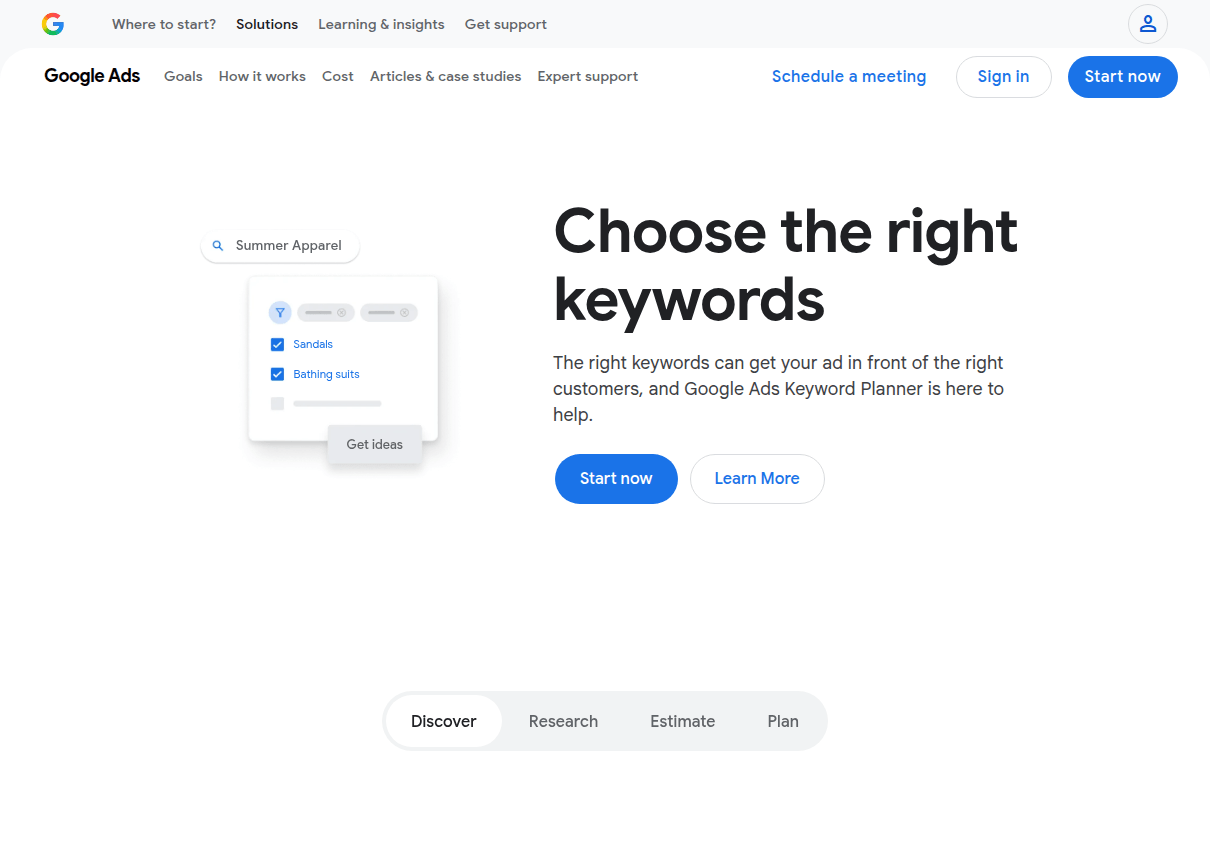
Everything it suggests is real, dated and measured, with volume ranges attached free. The bias is commercial: it surfaces what advertisers care about, which under-represents question keywords and informational long-tail.
It is free with a Google Ads account and you never need to run an ad. The exact-number volumes unlock only with active spend; the ranges are enough for ranking ideas.
The same seed, two outputs
Choose ChatGPT if...
- You are opening a topic and need the full map of audiences, problems and angles before anything else.
- Your niche is informational, where Keyword Planner's commercial bias leaves holes.
- You have a validation step waiting downstream, because you will need it.
Choose Keyword Planner if...
- You need volumes and competition attached to every idea, free.
- Your keywords feed ads or commercial pages, its native territory.
- You would rather have thirty real ideas than three hundred maybes.
The sequence that beats both
Run them in order, with an autocomplete step between: ChatGPT proposes themes, the generator on this site expands them into phrases people actually type, Keyword Planner ranks the survivors by demand.
Each machine covers the other's blind spot, and the middle step filters the fictions before you waste validation effort on them. The full toolbox, job by job, is in our generator roundup.
How we compared them
Both tools were run on identical seed topics in July 2026. ChatGPT plan prices reflect its published tiers this month; Keyword Planner remains free with a Google Ads account. Neither company sponsors this site.
The one-line takeaway: ChatGPT wins on breadth, Keyword Planner wins on truth. Brainstorm in one, validate in the other, and put an autocomplete check between them.