Question keywords tell you exactly what someone wants, in their own words, with a question mark of intent attached. Mining them one by one is slow; mining them by pattern is a system.
Here are the four free mining methods, and the clustering step that turns a hundred questions into ten pages instead of a hundred stubs.
Why questions deserve their own workflow
Questions are the raw material of featured snippets and People Also Ask boxes, and they are the phrasing AI assistants answer with. Ranking for them puts you in every answer surface at once.
They are also the easiest keywords to write for. "Why does my sourdough not rise" is a content brief; "sourdough" is a shrug.
Method 1: prefix sweeps through autocomplete
Feed the generator on this site question-shaped seeds: "how [topic]", "why [topic]", "can [topic]", "is [topic]". Each prefix pulls the real completions people type after it.
Five prefixes across three seed topics is fifteen quick searches, and typically a few hundred genuine questions. This is minute 3 of the 1,000-ideas workflow, run deeper.
Method 2: walk the People Also Ask tree
AlsoAsked expands any topic into Google's People Also Ask graph: each answer branches into the next round of questions searchers click.
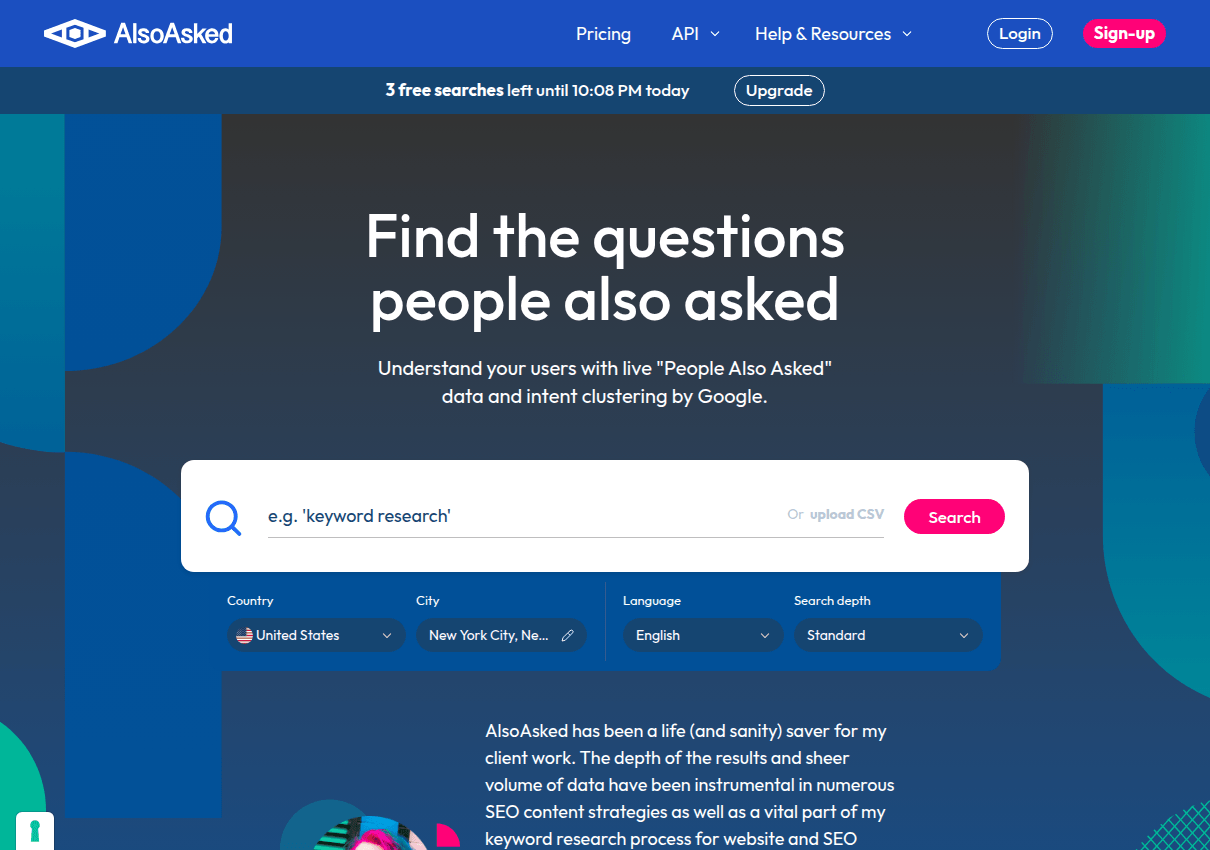
The branches carry structure, not just phrases. Questions on one branch belong on one page, which does half your clustering ahead of time.
Method 3: mine where people actually ask
Search suggestions record questions people ask Google. QuestionDB records questions people ask each other, pulled from forums and discussion boards.
The overlap between the two sources is small, which is the point. Forum questions are messier, more desperate and more specific, and the specific ones are content gaps almost nobody targets.
Method 4: generate the FAQ layer directly
The FAQ Generator from the Keywords Everywhere team pulls real People Also Ask questions for any keyword and produces a ready FAQ with valid schema markup.
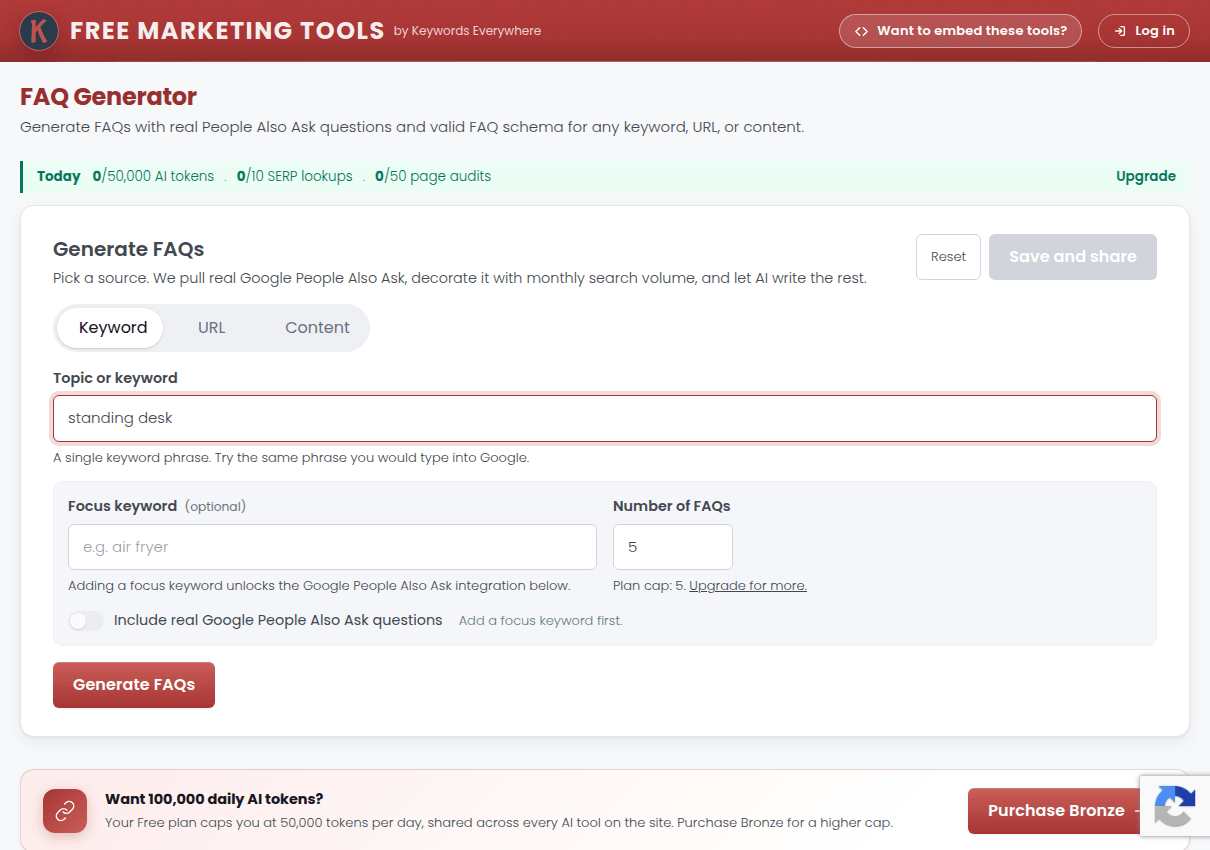
Use it at the end of the pipeline, once a page's topic is set: it hands you the FAQ section for that page with the questions Google already associates with the keyword.
Sort every question by its first word
The question word tells you the content format before you write a line.
| Starts with | Searcher wants | Build |
|---|---|---|
| what, who | A definition or identification | Explainer with the answer up top |
| why | A cause or justification | Explainer that goes one level deeper |
| how, how to | A process | Step-by-step tutorial |
| can, does, is, should | A yes or no, then nuance | Direct answer, then the "it depends" |
| vs, or, which | A decision between options | Comparison with a verdict |
The versus group is the sleeper: comparison questions signal buying decisions, and most niches leave them to chance. We built a whole workflow around picking those fights in the comparison format ourselves.
Cluster before you write
The scale trap is treating every mined question as a page. Most questions are facets of one underlying topic, and Google treats them that way too.
The clustering test: would one good page answer all of these at once? If yes, they are one page plus an FAQ block, and the FAQ Generator writes that block's markup for you.
The one-line takeaway: sweep question prefixes through autocomplete, walk the PAA tree, add forum questions, and let the FAQ Generator hand you the schema layer. Then cluster hard: questions are facets, and facets share pages.